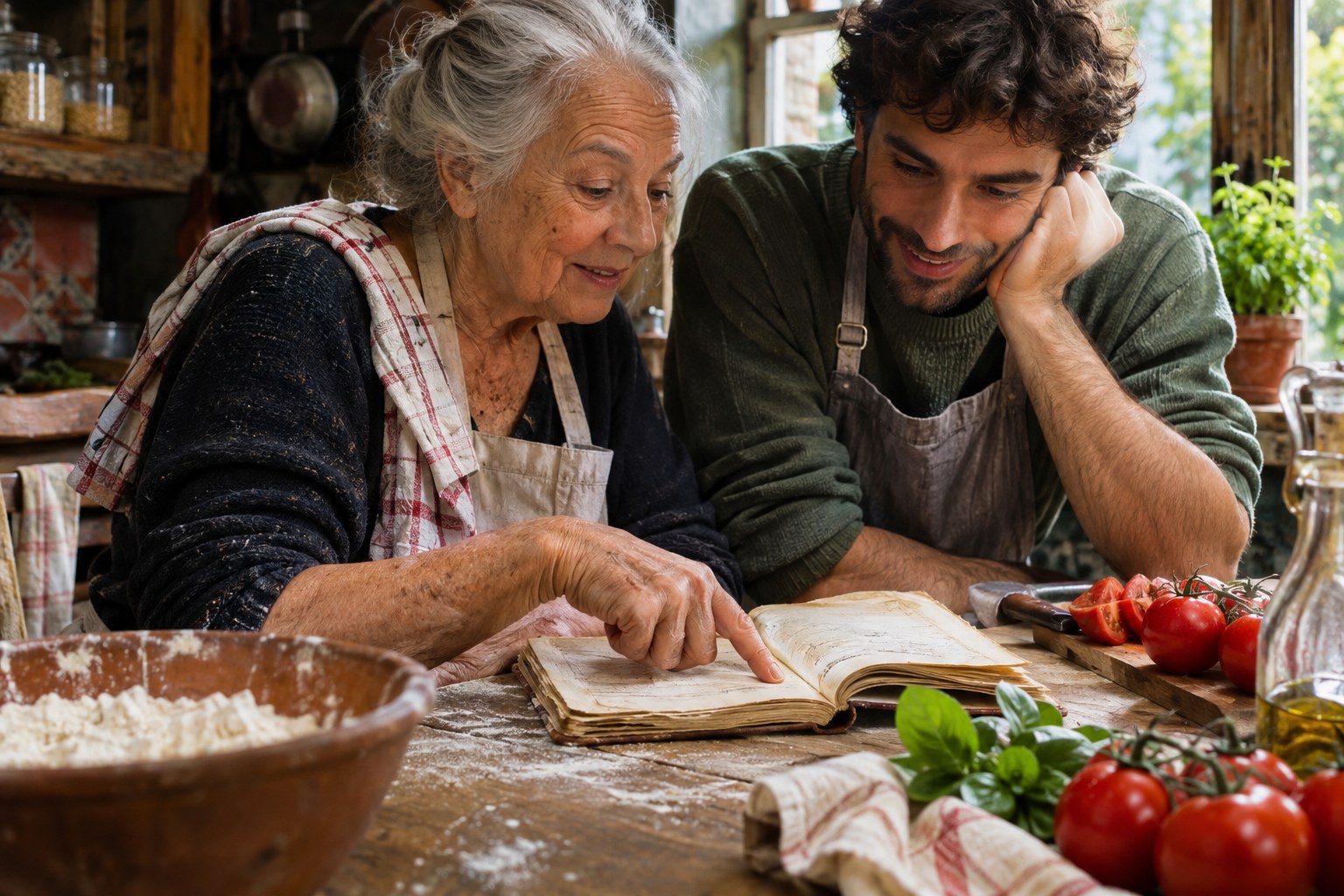
Ask about one occasion, not a whole family history
Start with a particular meal or person. When did this dish usually appear? Who changed an ingredient? Which part always took longer than expected? Specific questions often bring out details that disappear behind “We have always made it this way.”
Write down whose recollection you are keeping. Different relatives may remember the same meal differently. You can preserve more than one version without deciding that only one story is allowed to be correct.
Separate useful cooking notes from the personal story
Keep the ingredient list and method readable, then add a short memory alongside them. Ask the cook to check measurements and instructions instead of converting a familiar gesture into a confident number you guessed.
If someone has dietary needs, check ingredients and suitability directly; a family tradition is not proof that a dish suits everyone. Mark adaptations clearly. A new version can belong to the collection without being presented as the original recipe.
Make the next contribution small
Invite someone to share a photograph of the dish, a note about their first attempt, or the substitution they actually used. The mistakes can be part of the story too. A lopsided cake may hold more family character than a polished food photograph.
Agree on whether recipes, names, and pictures can be shared outside the circle. Keep your own copies of important notes and images. A private conversation can gather the memories without becoming the only place they exist.
Continue with our guide to [keeping an everyday photo journal](https://innerchats.com/blog/private-photo-journal-everyday-moments).
Your small, useful checklist
A family recipe becomes richer when its story stays attached. Save the useful detail, ask the next question, and leave room for someone else to add the version they remember. For a broader look at sharing information thoughtfully, explore [EFF’s digital privacy guides](https://ssd.eff.org/).